




You manage a building. You’ve got a hundred things demanding your attention every day. The last thing on your mind is what’s happening on the roof. Those HVAC units up there just run, right? Until they don’t.
Rooftop units (RTUs) are easy to forget because they’re out of sight. But ignoring them is a mistake that shows up on your energy bills and your repair invoices. A unit that isn’t maintained breaks down. It’s that simple.
This guide answers the question “How often should rooftop units (RTUs) be maintained?” and gives you a practical schedule to keep them running instead of failing.
Understanding Rooftop Units (RTUs)
Before we talk about maintenance schedules, let’s make sure we’re on the same page about what these units actually are.
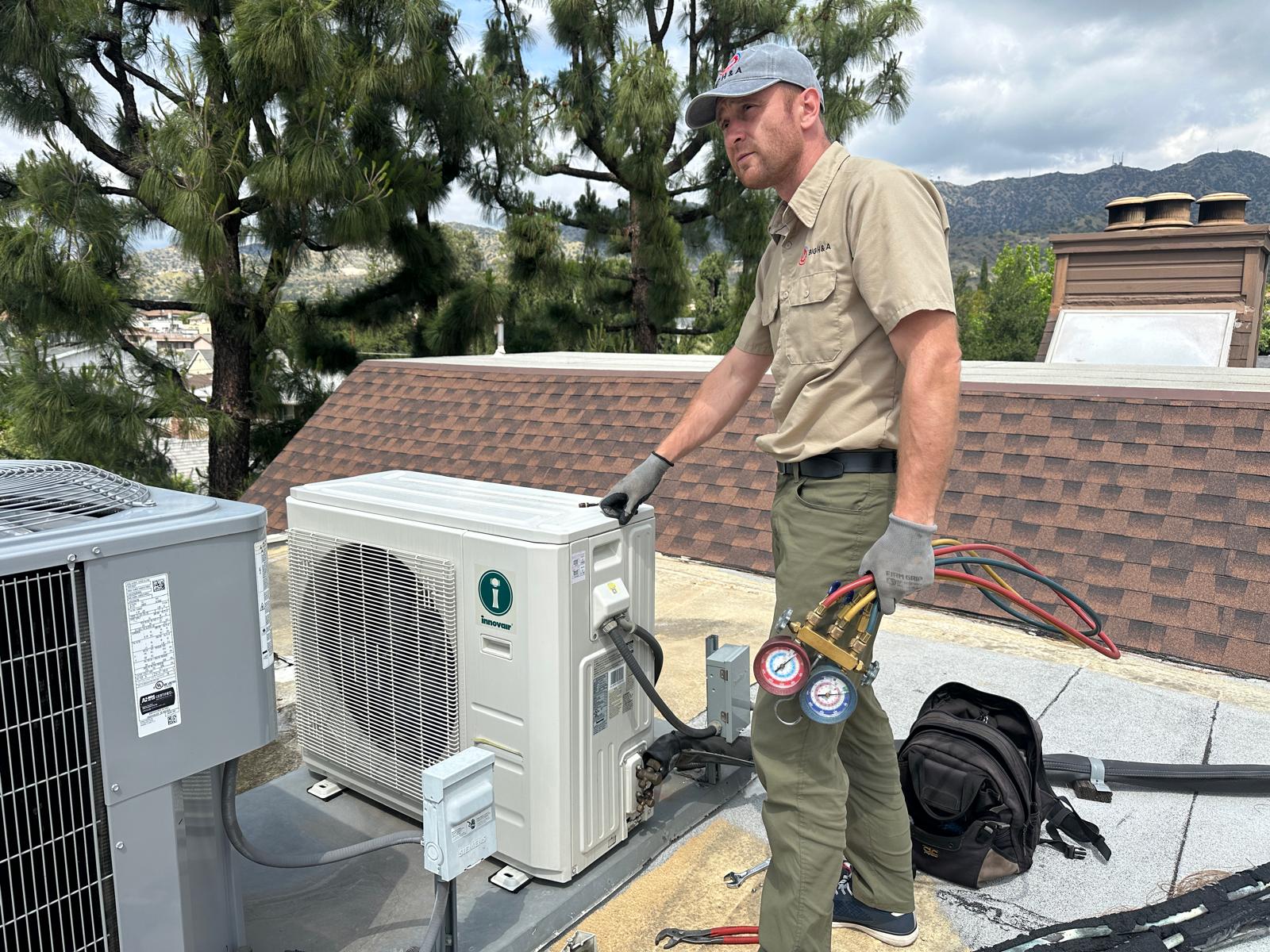
A RTU rooftop unit is a self-contained heating and cooling system. Everything lives in one metal box up on your roof. The compressor, the coils, the fans, the controls. All of it. Unlike a split system where half the equipment sits outside and the other half lives in a closet or basement, packaged units do everything in one place.
Rooftop Unit Components Include:
- Compressor that pumps refrigerant through the system
- Evaporator and condenser coils that transfer heat
- Fans and blowers that move air through the building
- Filters that clean the air before it enters the space
- Belts that drive the fans
- Controls and sensors that tell the unit when to run
The parts of a rooftop unit work together as an RTU HVAC system that heats, cools, and ventilates your building. Some units also include economizers that bring in outside air when conditions are right, saving energy. That’s a lot to ask of any machine, which is exactly why they need regular attention.
Why Regular Rooftop Unit Maintenance Is Critical
Think about what your rooftop unit deals with every single day. Sun beating down. Rain soaking in. Snow piling up. Dust and pollen blowing through. Temperature swings from freezing to scorching. All while trying to keep your building comfortable.
That’s a lot to ask from any machine.
Without regular attention, things start to slide. Coils get coated with dirt and can’t transfer heat efficiently. Filters clog up and restrict airflow. Belts stretch and slip. Refrigerant pressures drift out of spec. The unit works harder and harder just to do the same job, and your energy bills climb while your comfort drops.
Rooftop unit preventive maintenance catches these issues before they become failures. A technician who visits regularly spots the dirty coil, the worn belt, the loose electrical connection, and fixes them while they’re still small problems.
What is the lifespan of a rooftop unit? Most last between 15 and 20 years with proper care. Without it, you’re looking at major breakdowns much sooner. The units that get neglected rarely make it to their full potential. They limp along, costing more every year, until something big fails and forces an expensive rooftop unit replacement.
The difference between a unit that lasts 20 years and one that dies at 12 comes down to maintenance. It really is that simple.
Signs Your Rooftop Unit Needs Service
You don’t have to wait for a scheduled maintenance visit to know something’s wrong. Your unit will tell you when it’s struggling. You just have to know what to look for.
Signs rooftop unit needs service include:
- Weak airflow from vents inside the building
- Unusual noises like rattling, squealing, or banging
- Rising energy bills with no change in usage patterns
- Temperature swings or trouble holding set points
- Water leaks around the unit or inside the building
- Frequent cycling on and off
- Visible damage like rust, corrosion, or bent fins
Catching these early often means simple rooftop repairs. Ignoring them leads to major breakdowns and emergency calls at the worst possible times.
How Often Should Rooftop Units Be Maintained?
Now for the question you came here to answer. How often should you actually have someone look at these things?
Most commercial HVAC professionals recommend seasonal maintenance for rooftop units. That means four times a year, right before each season changes. Spring for cooling checks, fall for heating checks, and additional visits in between for heavy-use buildings.
How many times a year should rooftop units (RTUs) be serviced? For most buildings, the answer is four. Some facilities with lighter use might get away with two, spring and fall. Buildings that run 24/7, like hospitals or data centers, may need monthly attention.
Here’s a simple breakdown:
| Building Type | Recommended Maintenance Frequency |
| Office building, standard hours | Quarterly (4 times/year) |
| School, seasonal use | Twice yearly (spring/fall) |
| 24/7 operation, critical facility | Monthly to quarterly |
| Retail, restaurant | Quarterly |
| Light industrial | Quarterly |
Following a rooftop HVAC maintenance schedule keeps small problems from becoming big ones. A technician visiting four times a year sees issues developing and addresses them before they cause downtime.
Rooftop Unit Maintenance Checklist
A good maintenance visit covers a lot of ground. Here’s what should happen when a technician checks your unit.
Rooftop unit maintenance checklist:
- Inspect and clean filters. Dirty filters restrict airflow and make the unit work harder. Replace or clean as needed.
- Check refrigerant levels. Low refrigerant means a leak somewhere. Topping it off without fixing the leak is temporary at best.
- Clean coils. Evaporator and condenser coils collect dirt over time. Clean coils transfer heat efficiently. Dirty ones don’t.
- Inspect belts and fans. Belts stretch and wear. Fans get loose or out of balance. Both affect airflow and performance.
- Lubricate moving parts. Motors and bearings need lubrication. Dry parts fail faster.
- Tighten electrical connections. Loose connections cause voltage drops and heat buildup. Both lead to failures.
- Check controls and safeties. Thermostats, pressure switches, and safety circuits should all function correctly.
- Inspect drain pans and lines. Clogged drains cause water damage and mold growth.
- Test overall operation. Run the unit through heating and cooling cycles. Confirm it does what it’s supposed to do.
Following this rooftop unit HVAC maintenance routine catches most problems before they cause breakdowns. Some technicians use digital checklists they can share with you afterward. Ask for a copy so you know what was done and what was found.
Packaged unit maintenance isn’t complicated, but it does need to happen consistently. A unit that gets checked four times a year runs better, lasts longer, and costs less to operate than one that gets ignored.
Tips to Extend the Lifespan of Your Rooftop Unit
You know how often to maintain your unit and what to check. Now here are a few extra things you can do to help it last even longer.
Rooftop unit lifespan depends on more than just maintenance frequency. How the unit is treated day to day matters too.
- Keep the area clear. Don’t store anything on the roof near the units. Trash, debris, or equipment blocking airflow makes the unit work harder.
- Watch for nesting pests. Birds, rodents, and insects love warm, sheltered spots. Check for nests and signs of chewing.
- Address problems immediately. That strange noise or slight drop in performance won’t fix itself. The longer you wait, the more damage happens.
- Consider UV lights. Installing UV lights keeps coils cleaner between visits and reduces microbial growth.
- Monitor run times. If units run constantly or short cycle frequently, something’s wrong. Investigate instead of ignoring.
- Keep good records. Track maintenance visits, repairs, and observations. Patterns become obvious when you look at the history.
Rooftop HVAC units maintenance isn’t just about the technician’s visit. It’s about what happens the other 364 days of the year too. A unit that gets regular attention and respectful treatment can easily hit 20 years. One that gets ignored rarely makes it past 15.
Keep Your RTUs Running Strong
Rooftop units don’t fail overnight. They fail slowly, over months and years of neglect. Dirty coils, clogged filters, worn belts, and loose connections all add up until one day the unit stops and you’re facing an expensive emergency call. Four visits a year, a solid maintenance checklist, and paying attention to warning signs keep them running instead of failing.
If you need help keeping your HVAC units in top shape, Big H & A Solutions can help. We provide professional HVAC Installation & Maintenance for all types of equipment, including those rooftop units you’d rather not think about. Call us at +1 (747) 234-5044 or visit https://bighaservice.com/hvac-installation-maintenance/ to learn more.
FAQs
1. How often should rooftop units (RTUs) be maintained?
Most rooftop units should be serviced four times per year (quarterly). High-use or 24/7 facilities may require more frequent inspections.
2. What is the lifespan of a rooftop unit?
With proper rooftop unit maintenance, most RTUs last 15–20 years. Poor maintenance can shorten that lifespan significantly.
3. What are the signs a rooftop unit needs service?
Common signs include weak airflow, rising energy bills, unusual noises, refrigerant leaks, short cycling, and inconsistent temperatures.
4. What happens if rooftop HVAC maintenance is skipped?
Skipping maintenance leads to dirty components, reduced efficiency, higher operating costs, unexpected breakdowns, and potentially early rooftop unit replacement.
5. What is included in a rooftop unit maintenance checklist?
A typical checklist includes filter replacement, coil cleaning, refrigerant checks, belt inspection, electrical tightening, drain cleaning, and overall system performance testing.