





You walk into your house on a hot summer day and wait for that blast of cold air. Nothing. Or worse, the air comes out weak and barely cool. Your energy bill keeps creeping up, and you’re not sure why.
Here’s the thing about air conditioners. They don’t fail suddenly. They fail slowly, quietly, over months of neglect. A dirty filter here, a clogged drain there. By the time you notice, the damage is already done.
This guide covers 10 AC maintenance tips that actually work. Simple things you can do yourself, plus a few that are worth calling a pro for.
10 AC Maintenance Tips That Keep Your Unit Running Like New
Tip 1: Replace or Clean Air Filters Regularly
This is the single most important thing you can do for your AC. A dirty filter restricts airflow, which makes your system work harder, run longer, and cool less. Over time, that extra strain wears out components and drives up your energy bill.
Check your filter every month during the cooling season. If you have pets or run the system constantly, you’ll need to replace it more often. Disposable filters should be swapped out every 1 to 3 months. Washable filters need cleaning about every 30 days. Hold the filter up to a light. If you can’t see through it, it’s time for a new one. A clean filter is cheap insurance against bigger problems.
DIY AC maintenance tips start right here. This is something every homeowner can do with zero tools and five minutes of time. Mark it on your calendar. Set a reminder. Your AC will thank you.
Tip 2: Keep the Outdoor Unit Clean and Clear
Walk outside and take a look at your condenser unit. The one with the fan inside a metal cabinet. If it’s buried in leaves, surrounded by overgrown bushes, or caked with dirt, your AC is working twice as hard as it needs to.
The outdoor unit needs room to breathe. Keep at least two feet of clearance around all sides. Trim back any shrubs or plants that have gotten too close. Pull away leaves, grass clippings, and debris that collect near the base. A quick cleanup twice a year, once in spring before cooling season starts and once in fall after things wind down, makes a noticeable difference in performance.
If the coil fins look dirty, you can gently spray them with a garden hose. Never use a pressure washer. The force will bend the delicate fins and do more harm than good. A light rinse from the inside out, with the power shut off first, knocks off the dust that builds up over winter.
This is one of the easiest AC unit maintenance tips. No special tools, just a few minutes of your time a couple times a year.
Tip 3: Clean the Coils
Your AC has two sets of coils. The condenser coils outside release heat from your home. The evaporator coils inside absorb it. When either set gets dirty, heat transfer slows down, and your system has to run longer to hit the set temperature.
The outdoor coils are easy enough to clean yourself. Shut off power to the unit. Remove the fan cage if you can access it safely. Gently spray the coils from the inside out with a garden hose. A soft brush can help loosen stubborn dirt. The indoor evaporator coils are harder to reach and usually best left to a professional during an annual tune-up. Clean coils can improve efficiency by as much as 30 percent.
Tip 4: Clear the Condensate Drain Line
As your AC runs, it pulls moisture out of the air. That water drains through a small pipe, usually PVC, near your indoor unit. Over time, algae and gunk can clog that line. When that happens, water backs up and can cause damp spots, mold, or even a shutdown if the safety switch trips.
Find the drain line. Look for a small pipe with a cleanout cap near your furnace or air handler. Pour a cup of distilled white vinegar down it every few months. The vinegar kills algae before it can build up. If the line is already clogged, a wet/dry vacuum on the outdoor end of the pipe can pull the blockage loose.
Tip 5: Inspect and Seal Ductwork
Your ducts carry cooled air from your AC to every room. If they have leaks, that air escapes into your attic, crawlspace, or walls before it ever reaches you. That means your AC runs longer and your rooms never feel quite right.
Look at any ductwork you can see in unfinished basements or attics. Feel along the seams for escaping air. Check for disconnected sections, holes, or crushed spots. Seal small gaps with UL-listed foil tape, not regular duct tape which dries out and fails. For larger gaps, mastic sealant works better. Sealing leaky ducts can cut energy loss by 20 percent or more.
Maintenance on central air conditioner systems includes checking the ductwork that distributes the air. If you can’t access your ducts or find significant damage, a professional can perform a more thorough inspection.
Tip 6: Check Your Thermostat Settings
Your thermostat tells your AC when to run and when to stop. If it’s not reading temperature correctly, your system might be working overtime for no reason.
Make sure the thermostat is level on the wall. A slight tilt can throw off the reading. If it’s battery powered, fresh batteries prevent unexpected shutdowns. Consider upgrading to a programmable or smart thermostat if you haven’t already. These models learn your schedule and adjust temperatures automatically, saving energy when you’re away and cooling back down before you get home.
Tip 7: Listen for Unusual Noises and Watch for Common AC Problems
Your AC shouldn’t make sounds that make you look up from what you’re doing. Grinding, squealing, banging, or hissing are all signs something’s wrong.
Grinding often means a motor bearing is failing. Squealing could be a worn belt or fan motor. Hissing might indicate a refrigerant leak. If you hear any of these, don’t wait to see if they go away. They won’t. Early attention can mean a simple repair instead of a full replacement.
Common AC problems and solutions start with noticing the noise before the system stops working completely.
Tip 8: Ensure Proper Airflow Throughout the System
Cooling needs air movement to work. If air can’t get in or out, your AC struggles.
Check every supply register and return vent in your home. Are they blocked by furniture, curtains, or rugs? Move anything that’s in the way. Vacuum the vent covers to remove dust buildup. If some rooms feel much warmer than others, you might have an imbalance that needs professional attention.
AC system troubleshooting often starts with airflow. Fix the simple stuff first before assuming something major is wrong.
Tip 9: Perform Basic DIY AC Maintenance Tasks Safely
Before you do any work on your AC, turn off the power. Flip the breaker. Shut off the disconnect switch near the outdoor unit. Water and electricity don’t mix, and even a small shock can be dangerous.
Stick to the basics. Changing filters, clearing debris from the outdoor unit, flushing the condensate line, and keeping vents clear are all safe for homeowners. Leave refrigerant handling, electrical repairs, and anything inside the sealed system to the pros.
Proper AC maintenance means knowing where to draw the line between what you can handle and what needs a trained technician.
Tip 10: Schedule Professional Maintenance Regularly
Even with perfect DIY habits, your AC needs a professional once a year. A technician will check refrigerant levels, tighten electrical connections, inspect the compressor, test safety controls, and catch small problems before they become expensive failures.
The best time is spring, before the heat hits. That way you’re not competing with emergency calls when something breaks on the hottest day of the year. A professional tune-up costs a fraction of what an emergency repair runs.
Cooling maintenance done by a licensed technician keeps your warranty valid, catches hidden issues, and gives you peace of mind that your system is ready for whatever summer throws at it.
AC Maintenance Checklist for Homeowners
Keep this list handy. Quick checks throughout the year keep your system running when you need it most.
- Filters. Check monthly. Replace or clean every 1 to 3 months. More often if you have pets or run the system constantly.
- Outdoor unit. Clear leaves and debris. Trim plants back at least two feet. Spray coils gently with a hose twice a year.
- Condensate drain. Pour vinegar down the line every few months. Watch for clogs that can cause water damage.
- Vents and registers. Make sure furniture isn’t blocking airflow. Vacuum covers to remove dust.
- Thermostat. Check batteries. Make sure it’s level. Consider upgrading to a smart model for automatic savings.
- Listen. Pay attention to new sounds. Grinding, squealing, or hissing means something needs attention.
- Professional tune-up. Schedule once a year in spring. A licensed technician checks what you can’t see.
Tips for AC maintenance don’t have to be complicated. The basics make the biggest difference. A clean filter, clear outdoor unit, and annual professional check catch most problems before they become emergencies.
AC system maintenance tips like these work for central air, split systems, and ductless units. The principles are the same. Keep it clean. Keep the air moving. Catch issues early.
Maintenance tips for AC that actually work aren’t about complicated tools or technical skills. They’re about consistency. Do the simple things on schedule, and your system will outlast the ones that get ignored.
Maintenance of split AC systems follows the same rules. Clean filters, clear outdoor unit, clear condensate line, annual professional check. The indoor head units need their filters cleaned regularly too.
Keep Your Cool All Summer Long
Ten tips that actually work. Change your filters. Clear the outdoor unit. Flush the drain line. Seal leaky ducts. Listen for noises. Call a pro once a year. Each one seems small, but together they make the difference between a system that struggles and one that runs like new. A clean filter alone cuts energy use by up to 15 percent. Coil cleaning boosts efficiency by 30 percent. The basics add up.
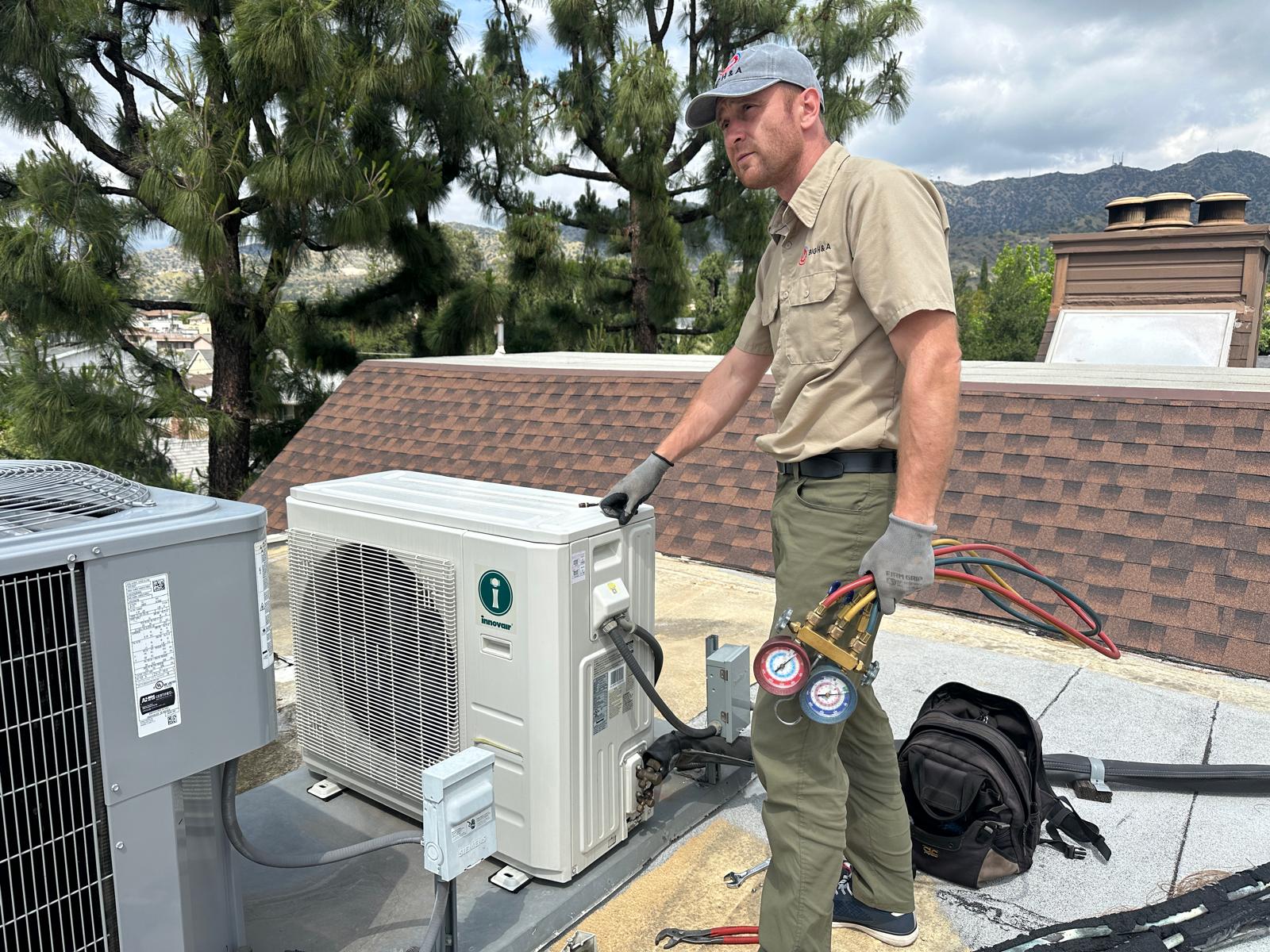
If you’d rather leave it to the pros, Big H & A Service has you covered. We provide professional AC Services, including a full range of AC maintenance services with licensed and insured technicians who keep your unit performing at its peak all year long.
Frequently Asked Questions
1. How often should I perform AC maintenance?
At least once a year professionally, plus monthly filter checks and basic DIY maintenance throughout the cooling season.
2. What is the most important AC maintenance task?
Replacing or cleaning the air filter regularly—this alone improves airflow, efficiency, and prevents most common AC issues.
3. What are common AC problems homeowners face?
Dirty filters, weak airflow, clogged drain lines, refrigerant issues, and unusual noises are among the most common problems.
4. Can I do AC maintenance myself?
Yes, basic tasks like changing filters, cleaning vents, and clearing debris are safe DIY AC maintenance steps. Leave complex repairs to professionals.
5. When should I call a professional for AC maintenance?
Call a technician if you notice poor cooling, strange noises, water leaks, or frequent cycling.