





You know that feeling. It’s the first real heat wave of the year. You flip the thermostat to cool, hear the system kick on, and wait. And wait. The air coming out of the vents is barely cool. Your house isn’t getting any cooler. And you’re left wondering if you should have done something sooner.
If you’ve been asking yourself how often should you service your AC, you’re not alone. Most homeowners know AC maintenance matters. They just don’t know the right schedule. Once a year? Twice? Only when something breaks?
This guide gives you a straight answer and breaks down exactly how often your system needs attention based on your home, your climate, and how you use it.
How Often Should You Service Your AC? (Quick Expert Answer for 2026)
Let’s get straight to the answer most people are looking for.
For the average home with a standard central air system, professional AC maintenance should happen at least once a year. The ideal time is spring, before the heat arrives. That way your system is ready when you need it most.
If you live in a hot climate where your AC runs 8 to 10 months out of the year, or if you have an older system, consider moving to bi-annual service. Spring and fall. One tune-up before summer, another after heavy use to catch any wear before it becomes a problem.
How often should AC unit be serviced depends on a few key factors. Here’s a quick reference:
| Factor | Recommended Frequency |
| Standard home, moderate climate | Once per year (spring) |
| Hot climate (desert, humid subtropical) | Twice per year (spring + fall) |
| Older system (10+ years) | Twice per year |
| Heavy usage (runs most of the year) | Twice per year |
| Newer system, light usage | Once per year |
| Commercial or multi-unit building | Quarterly or as recommended |
Is it necessary to service AC every year? For most homeowners, yes. Even if your system seems fine, small issues develop quietly. A dirty coil, a loose connection, a refrigerant level that’s slightly off. None of them announce themselves. But they all cost you money and shorten your system’s life.
But if you are still wondering, “Should I get my AC serviced every year?”, think of it like an oil change for your car. You don’t wait for the engine to knock before changing the oil. You do it on schedule to prevent the knock from ever happening.
What Determines Your AC Maintenance Schedule?
The one-size-fits-all answer works for most people. But your actual schedule might need adjusting based on how you live and where you live.
Usage Intensity
A system that runs 12 hours a day wears faster than one that cycles on and off for a few hours. If your AC works hard, it needs more attention. Commercial AC maintenance often happens quarterly because those systems run constantly.
Climate
Hot, dusty environments take a toll on ACs. Sand and dust clog filters and coat coils. High humidity encourages mold in drain lines. In these conditions, annual AC maintenance isn’t enough. Twice a year is smarter.
System Type
Different systems have different needs. Central AC system maintenance focuses on ductwork and the outdoor unit. Mini split AC maintenance involves cleaning indoor head units and checking refrigerant lines. Ductless AC maintenance is similar but requires cleaning each individual unit. Window AC unit maintenance is simpler but still needs annual attention.
System Age
An older system needs closer monitoring. Components wear. Efficiency drops. What worked at 10 years needs more care at 15. Regular yearly AC maintenance catches issues before they become failures.
Pets and Indoor Air Quality
Homes with shedding pets fill filters faster. If you have allergies, you might already change filters monthly. That doesn’t replace professional service, but it does mean your system sees more debris.
Your AC maintenance schedule should reflect your actual life, not just a calendar date.
What Does Professional AC Maintenance Include?
When you schedule professional service, you’re not paying someone to simply look at your unit. You’re paying for a thorough inspection and tune-up that addresses everything that could go wrong.
Here’s what a proper Air conditioner maintenance service typically includes:
| Component | What Gets Done |
| Electrical connections | Checked and tightened to prevent shorts and failures |
| Capacitors and contactors | Tested for wear; replaced if needed |
| Condenser and evaporator coils | Cleaned to improve heat transfer |
| Refrigerant levels | Checked; leaks identified and repaired |
| Airflow | Measured; ductwork inspected for restrictions |
| Drain line | Cleared of algae and debris |
| Thermostat | Calibrated for accurate temperature control |
| Filters | Replaced or cleaned |
| Moving parts | Lubricated to reduce wear |
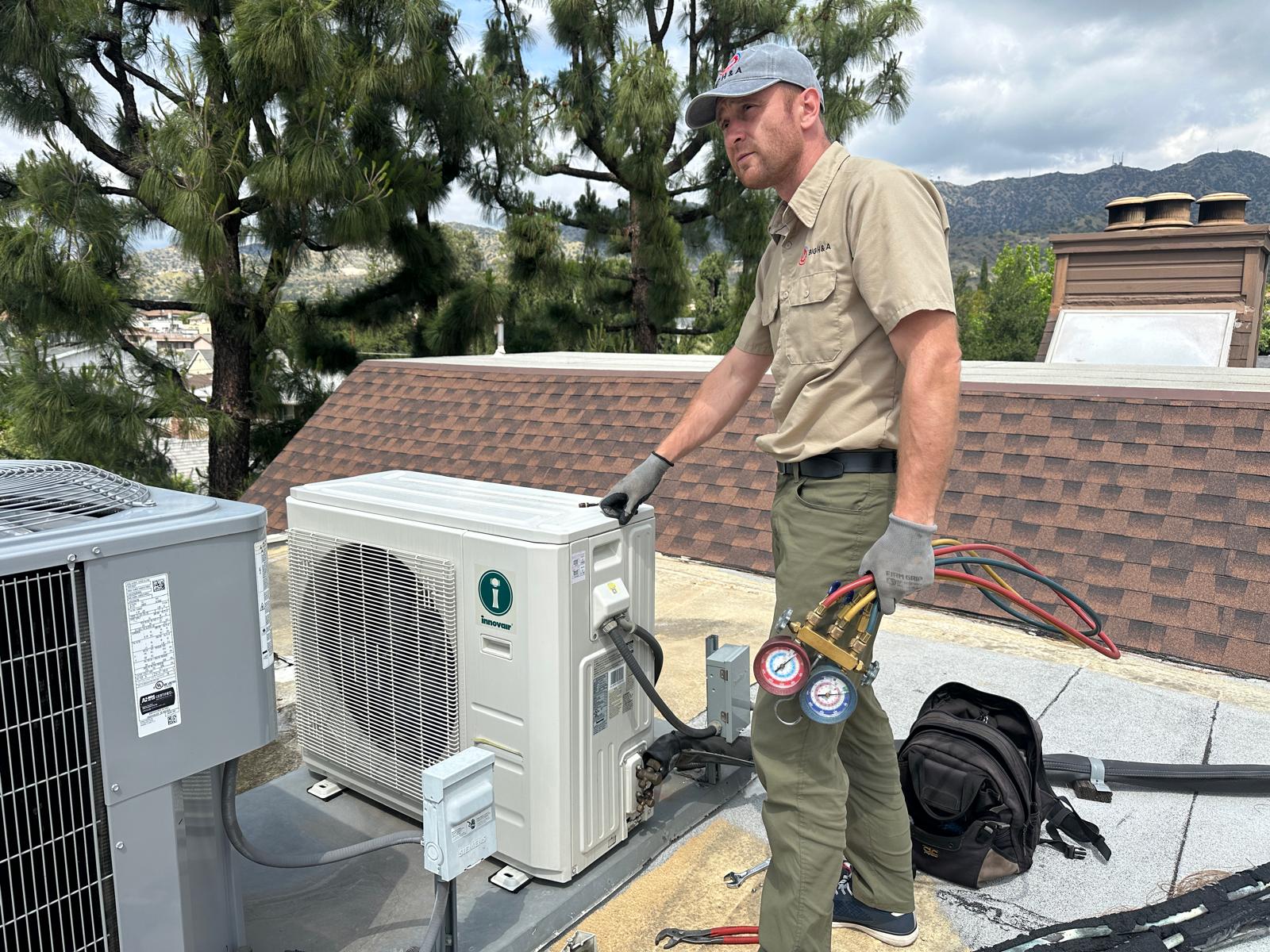
The air conditioner maintenance checklist covers everything that affects efficiency and lifespan. A good technician doesn’t skip steps. They follow a process designed to catch problems before they become breakdowns.
AC preventative maintenance is about spotting the small things. A refrigerant level that’s slightly low. A capacitor that’s testing weak. A drain line starting to clog. Fixed now, they’re minor. Ignored, they become mid-summer emergencies.
A proper Air conditioner tune-up takes about an hour for a standard system. But it’s time well spent.
Routine & DIY AC Maintenance: What You Should Do Between Services
Professional service once or twice a year is essential. But what you do in between matters just as much.
Routine AC maintenance doesn’t require tools or training. It’s about paying attention and handling the basics.
AC DIY maintenance tasks you can handle safely:
- Change or clean filters. Every 1 to 3 months depending on usage and pets. A clogged filter is the most common reason systems struggle.
- Keep the outdoor unit clear. Trim back plants, remove leaves, and make sure there’s at least two feet of clearance around the unit.
- Watch for ice. If you see ice forming on refrigerant lines or the outdoor unit in summer, something’s wrong.
- Listen. New sounds mean something has changed. Grinding, squealing, or banging needs attention.
- Check your drain line. A slow drip or water where it shouldn’t be means the line is clogging.
Maintenance of air conditioner systems starts with these simple habits. They’re not replacements for professional service. They’re complements that keep your system stable between visits.
Signs Your AC Needs Immediate Service
You don’t have to wait for a scheduled visit if something feels wrong. Your system will tell you when it needs attention.
If you notice any of these, don’t put off calling for help:
- Weak airflow. The system runs, but barely any air comes out of the vents.
- Uneven cooling. Some rooms are freezing while others feel like they’re not getting any air at all.
- Strange noises. Grinding, squealing, rattling, or banging are never normal.
- Unusual smells. Musty odors mean mold. Burning smells mean electrical issues.
- Water leaks. Moisture around the indoor unit means a clogged drain or worse.
- Skyrocketing bills. If your energy costs jump without explanation, your system is struggling.
These signs don’t go away on their own. They get worse. AC maintenance isn’t just about scheduled visits. It’s about acting when your system sends a signal.
The truth is, home air conditioner maintenance starts with paying attention. The small problems are easier to fix. The ones you ignore become the ones that fail on the hottest day of the year.
Benefits of Regular AC Maintenance
Still wondering if it’s worth the time and money? Here’s what consistent service gets you.
Lower Energy Bills
A clean, properly tuned system runs efficiently. A dirty one struggles. When coils are clean, refrigerant levels are correct, and airflow is unrestricted, your AC uses less energy to cool your home. The difference shows up on your monthly bill.
Fewer Emergency Repairs
Nothing is more expensive than a breakdown on the hottest day of summer. Emergency service calls cost more. Parts cost more. And you’re at the mercy of whatever technician is available. Regular benefits of AC maintenance include catching problems early, when they’re still cheap to fix.
Longer System Lifespan
Your AC is a major investment. Replacing it costs thousands, while regular service helps it last. A system that gets yearly attention often runs 15 years or more. One that gets ignored might tap out at 10. The math is simple. Maintenance costs far less than premature replacement.
Better Air Quality
A clean system circulates clean air. Dirty coils and filters breed mold and bacteria that get blown into your living space. Regular service keeps the air moving through your home cleaner and healthier for everyone inside.
Warranty Protection
Most manufacturers require proof of regular maintenance to honor warranties. Skip service and a major component fails? You might be paying out of pocket. Keep up with spring AC maintenance and summer AC maintenance visits and your warranty stays valid.
Peace of Mind
The real value of AC maintenance is knowing your system won’t leave you sweating. When the heat hits, you can count on cool air. That peace of mind is worth more than any repair bill you didn’t have to pay.
Final Thoughts
Most homes need professional AC service once a year, ideally in spring. Hot climates, older systems, and heavy usage call for twice yearly. Between visits, change filters, keep the outdoor unit clear, and watch for warning signs like weak airflow, strange noises, or water leaks. The benefits are clear: lower bills, fewer emergencies, longer lifespan, and better air quality. Consistency is what keeps your system running.
If you’re ready to stop worrying about your AC and start enjoying cool, reliable comfort, Big H & A Service can help. We provide professional AC Services with fast, affordable air conditioner tune-ups from a licensed and insured team that keeps your system in peak condition so you’re never left sweating.
Call us at +1 (747) 234-5044 to learn more.
Frequently Asked Questions
1. How often should you service your AC?
Most AC systems should be serviced at least once a year, ideally in spring. In hot climates or with heavy usage, twice a year is recommended.
2. Is it necessary to service AC every year?
Yes. Annual AC maintenance helps prevent breakdowns, improves efficiency, and extends the system’s lifespan.
3. What happens if you don’t service your AC regularly?
Skipping maintenance can lead to higher energy bills, poor cooling, system wear, and unexpected breakdowns.
4. Can I do AC maintenance myself?
You can handle basic tasks like filter cleaning and checking airflow, but professional servicing is required for internal components and refrigerant checks.
5. What is included in an air conditioner tune-up?
A tune-up typically includes cleaning coils, checking refrigerant, inspecting electrical parts, testing airflow,