
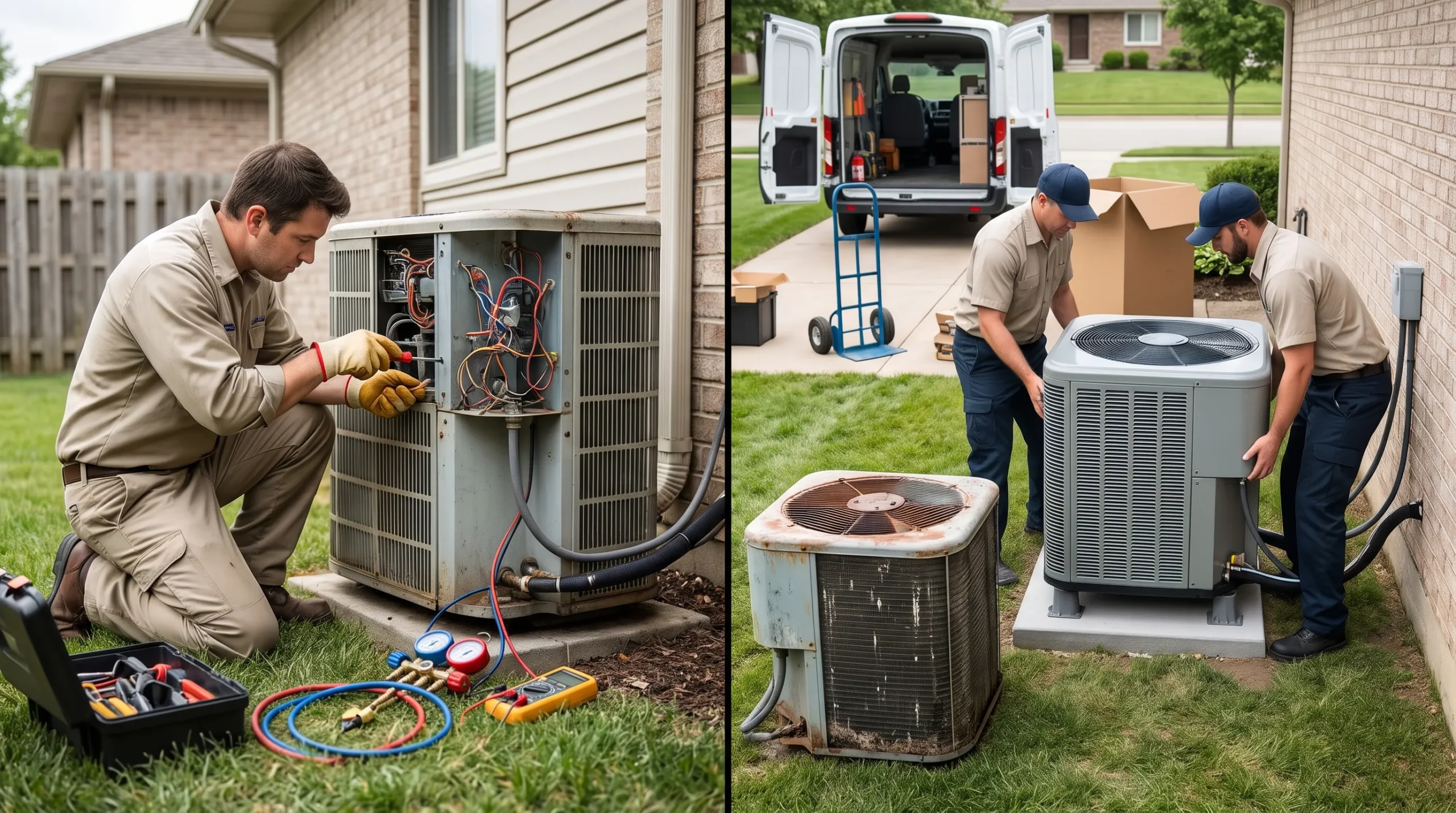




Your air conditioner stops cooling properly during a hot Southern California afternoon. The thermostat is set to 72°F, but the house keeps getting warmer. You may wonder whether the problem requires a simple repair or an entirely new cooling system. The difference between AC repair and AC replacement depends on the condition of your existing equipment. AC repair fixes faulty components to restore cooling, while AC replacement involves installing new equipment when the current system is too expensive to repair, inefficient, or no longer suitable for your home.
A malfunctioning air conditioner does not automatically need replacing. Some problems require only a minor electrical repair or a new motor. Others involve major components that can cost thousands of dollars to replace. For Southern California homeowners, equipment age, repair history, electricity consumption, and summer cooling demand all influence the decision.
AC Repair vs. AC Replacement: How Each Service Works
Both services restore indoor cooling, but they involve different work, expenses, and long-term outcomes.
AC Repair Fixes Faulty Parts in Your Existing System
Air conditioning repair involves finding the cause of a malfunction and correcting it without replacing the entire system. For example, a failed capacitor may prevent the outdoor condenser from starting. A faulty fan motor can restrict airflow, while a clogged condensate drain may shut down the system.
Common AC repair services include:
- Replacing failed capacitors and electrical contactors.
- Repairing damaged wiring and electrical connections.
- Replacing faulty condenser or blower motors.
- Clearing blocked condensate drain lines.
- Finding and repairing refrigerant leaks.
- Replacing malfunctioning thermostats and sensors.
- Cleaning dirty evaporator and condenser coils.
Once the technician identifies the problem, they can determine whether repairing the affected component will restore normal operation. Repairs generally cost less upfront when the problem is limited and the remaining equipment is in good condition.
AC Replacement Installs New Cooling Equipment
Air conditioner replacement involves removing existing cooling equipment and installing new components selected for the home’s requirements. Depending on the system, the work may include replacing the outdoor condenser, indoor evaporator coil, or a complete matched cooling system.
Before installation, an HVAC technician should evaluate the home’s cooling load, existing ductwork, electrical connections, and equipment compatibility. Newer systems may offer higher SEER2 efficiency ratings, improved temperature control, and quieter operation compared with older equipment. However, installing a new AC does not automatically correct every cooling problem. Poor ductwork, restricted airflow, and incorrect equipment sizing can still affect performance.
When Repairing Your Air Conditioner Is the Better Choice
Many cooling problems can be corrected without purchasing new equipment. Repair is often a practical option when the system has been operating well and the failed component can be replaced at a reasonable cost.
Your AC Is Still Relatively New
An air conditioner that is only a few years old may have substantial service life remaining. If the equipment has been maintained and the problem is limited to one component, repair is usually worth considering. Newer systems may also have manufacturer warranty coverage for certain parts. Check the warranty before paying for a replacement component.
Only One Component Needs Repair
A faulty capacitor, thermostat, contactor, or fan motor does not necessarily indicate that the entire cooling system is failing. Replacing the affected part may restore normal operation. However, repeated failure of the same component requires further investigation. For example, a motor that repeatedly overheats may have an underlying airflow or electrical problem.
Your System Has a Good Maintenance History
An air conditioner that receives regular inspections, filter changes, and coil cleaning may remain in good condition for many years. If the system has rarely needed repairs, a single breakdown may not justify replacement. A technician can examine the compressor, coils, electrical components, and overall cooling performance before recommending additional work.
The Repair Costs Less Than Replacing the Equipment
Minor repairs are generally less expensive than installing a new air conditioner. If the repair restores normal cooling and the equipment is expected to remain usable for several more years, keeping the existing system may be the better financial decision. Compare the written repair estimate with the equipment’s age, warranty coverage, and previous service expenses.
When Replacing Your Air Conditioner Is Worth Considering
Some air conditioners develop recurring problems as their components age. Continuing to repair the equipment may become expensive, particularly when major parts begin failing.
Your AC Is More Than 10 to 15 Years Old
Many residential air conditioners operate for approximately 10 to 15 years or longer, depending on maintenance, installation quality, and operating conditions.
An older unit can still be repaired successfully.
However, if your air conditioner is more than 10 years old and requires an expensive repair, comparing new equipment options is sensible. Newer models may also offer improved energy efficiency compared with equipment installed many years ago.
Repair Bills Keep Adding Up
One repair every few years is different from several breakdowns during the same cooling season. If you have already paid for a motor, electrical components, and refrigerant-related work, another expensive repair may be difficult to justify. Review your service records and calculate how much you have spent over the past two or three years. Compare that amount with the cost of replacement and the expected remaining life of the current equipment.
The Compressor or Evaporator Coil Has Failed
The compressor and evaporator coil are major air conditioning components. Compressor replacement can involve substantial labor, parts, and refrigerant work. Evaporator coil replacement may also be expensive, depending on the system’s design and accessibility. For newer equipment with warranty coverage, repairing these components may be reasonable. For an older unit with other existing problems, replacing the cooling equipment may provide better long-term value.
Your AC Cannot Maintain the Set Temperature
An air conditioner that runs continuously without reaching the thermostat setting may have several possible problems. These include restricted airflow, refrigerant leaks, dirty coils, compressor problems, or incorrectly sized equipment. Some causes can be repaired. Others may indicate that the current system is no longer suitable for the home’s cooling requirements. A professional diagnosis should identify the cause before replacement is recommended.
Your Cooling Costs Continue to Increase
Older cooling equipment may consume more electricity as efficiency declines or components deteriorate. However, rising electricity bills can also result from hotter weather, increased AC usage, utility rate changes, or neglected maintenance. Compare electricity consumption during similar weather conditions and have the equipment inspected. If the existing system is inefficient and requires frequent repairs, replacement with a properly sized, higher-efficiency unit may reduce cooling-related energy consumption.
AC Repair vs. Replacement Cost in Southern California
The cost of air conditioner repair vs. replacement varies according to the problem, equipment type, property requirements, and installation work involved. A minor electrical repair may cost considerably less than replacing an entire cooling system. Major component repairs can be much more expensive. Rather than choosing based only on the first estimate, compare the following expenses.
Compare the Repair Estimate with the Replacement Price
Ask your HVAC contractor for a written repair estimate that identifies the failed components and required work. For replacement, request an estimate showing the proposed equipment, installation labor, and any additional work. Comparing both estimates helps you see the difference between restoring the current system and purchasing new equipment.
Check Your Equipment Warranty
Manufacturer warranties may cover eligible parts for a specified period. If the failed component is still covered, repair could be significantly less expensive than replacement. Warranty terms vary by manufacturer, product registration, installation history, and the specific component.
Review Previous Repair Expenses
Keep track of repairs completed during recent cooling seasons. If multiple expensive components have already failed, another major repair may offer limited financial benefit. A technician can assess whether the remaining equipment appears suitable for continued operation.
Compare Old and New AC Efficiency Ratings
Air conditioner efficiency is commonly expressed using SEER2 ratings. A higher SEER2 rating generally indicates greater seasonal cooling efficiency under standardized test conditions. However, actual electricity savings depend on the old system’s efficiency, household cooling demand, thermostat settings, weather, and installation quality.
Include Installation and Permit Costs
A replacement estimate may include more than the new air conditioner.
Additional expenses can involve:
- Indoor and outdoor equipment installation.
- Refrigerant line modifications.
- Electrical upgrades.
- Ductwork repairs or adjustments.
- Equipment access requirements.
- Permits and required testing.
- Thermostat or control compatibility.
Ask which services are included in the quoted price before approving the installation.
How Southern California’s Climate Affects Air Conditioning Systems
Southern California has different cooling conditions across inland valleys, coastal communities, and densely developed neighborhoods.
A home in Woodland Hills may experience much higher summer temperatures than a coastal property in Santa Monica. These differences influence how often an air conditioner operates and the demands placed on its components.
Extended Cooling Hours During Inland Summers
Communities such as Woodland Hills, Santa Clarita, and parts of Pasadena can experience prolonged periods of high summer temperatures. Air conditioners may operate for many hours to maintain comfortable indoor conditions. Frequent operation places additional demand on compressors, fan motors, and other mechanical components. Regular maintenance can help identify developing problems before they interrupt cooling during hot weather.
Dust and Debris Around Outdoor AC Units
Outdoor condenser units collect dust, leaves, and landscaping debris over time. When dirt restricts airflow through the condenser coil, the equipment may struggle to release heat efficiently. Cleaning the coil and removing surrounding obstructions can improve performance when buildup is the primary problem. A dirty condenser does not automatically mean the unit needs replacement.
Coastal Moisture and Equipment Corrosion
Properties in coastal communities such as Santa Monica and Venice may experience greater exposure to moisture and airborne salt. These conditions can contribute to corrosion on outdoor equipment. A technician can inspect the condenser cabinet, coils, electrical connections, and other components to determine whether the damage is repairable.
California HVAC Installation and Energy Requirements
California has energy efficiency and building requirements that can apply to residential air conditioning replacement. The 2025 California Energy Code took effect on January 1, 2026. Depending on the project, replacement may require permits, duct testing, equipment verification, or other compliance work. Requirements vary by jurisdiction and installation type, so homeowners should confirm the applicable rules with their HVAC contractor and local building department.
AC Problems That May Not Require Replacement
Before replacing an air conditioner, the technician should check for common problems that can reduce cooling performance.
Thermostat Malfunctions
Incorrect thermostat readings, damaged sensors, or faulty control connections can prevent an air conditioner from operating normally. Repairing or replacing the thermostat may resolve the problem without changing the cooling equipment.
Restricted Airflow and Dirty Filters
Clogged filters, blocked vents, and blower problems can reduce the amount of conditioned air reaching the rooms. Restricted airflow may also contribute to frozen evaporator coils and reduced cooling capacity. Correcting the airflow problem can restore performance when the main equipment is otherwise functioning properly.
Refrigerant Leaks
An air conditioner requires the correct refrigerant charge to operate efficiently. If refrigerant levels are low, the technician should investigate possible leaks rather than repeatedly adding refrigerant. Repairing the leak and restoring the correct charge may resolve the cooling problem, depending on the system’s condition.
Dirty Evaporator and Condenser Coils
Dust and contamination on cooling coils can interfere with heat transfer. Professional coil cleaning may improve performance when dirt buildup is responsible for reduced cooling.
Leaking or Damaged Ductwork
Damaged ducts can allow cooled air to escape before reaching living spaces. This may cause uneven room temperatures, longer operating cycles, and unnecessary electricity consumption. Repairing duct leaks may improve comfort without replacing the air conditioner.
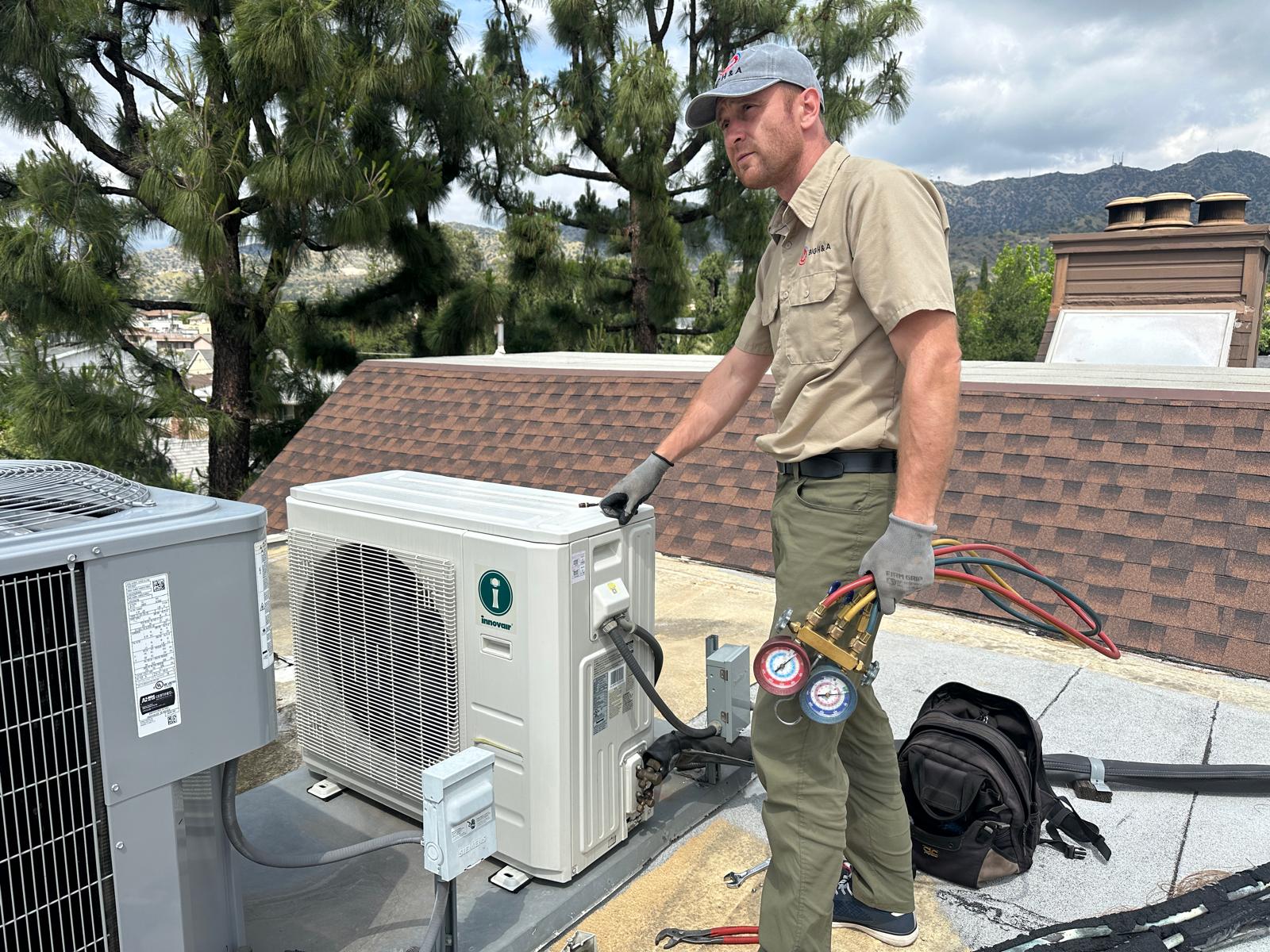
If your cooling system repeatedly struggles to maintain the temperature, Big H & A Services offers HVAC services in Southern California, including AC inspections, repairs, maintenance, and installation. A professional inspection can identify the faulty components and help determine whether repair or replacement is appropriate.
Can You Replace Only the Outdoor AC Unit?
Replacing only the outdoor condenser is possible in some situations, but the new equipment must be compatible with the existing indoor components. Central air conditioning systems rely on properly matched indoor and outdoor equipment. Installing an incompatible condenser can affect cooling performance, efficiency, refrigerant operation, and warranty eligibility. A technician should evaluate the existing evaporator coil, refrigerant type, equipment capacity, and manufacturer specifications before recommending partial replacement.
Older Refrigerant Systems
Some older air conditioners use refrigerants that are no longer used in many new systems. However, changes to refrigerant regulations do not automatically require homeowners to replace functioning equipment. For example, existing R-410A systems can generally continue operating and receive appropriate repairs. When new equipment is installed, the selected components must meet applicable refrigerant requirements and manufacturer compatibility specifications.
Frequently Asked Questions About AC Repair and Replacement
Is it cheaper to repair an AC or replace it?
AC repair usually costs less initially when the problem involves a minor component. Replacement costs more upfront but may be more economical when an older system requires frequent or expensive repairs.
Is a 10-year-old air conditioner worth repairing?
A 10-year-old air conditioner may still be worth repairing if it has been maintained and the repair cost is reasonable. The decision should also consider equipment condition, warranty coverage, and previous breakdowns.
Should I replace my AC if the compressor fails?
Not necessarily. Compressor replacement may be reasonable for newer equipment with warranty coverage. For older systems, compare the repair estimate with the cost of installing new cooling equipment.
Will a new air conditioner lower my electricity bill?
A properly sized, higher-efficiency air conditioner may reduce cooling-related electricity consumption compared with an older, less efficient system. Actual savings depend on operating conditions, household usage, and installation quality.
How long does an air conditioner last in Southern California?
Many residential air conditioners last approximately 10 to 15 years or longer. Equipment lifespan depends on maintenance, installation quality, operating hours, and environmental exposure.
Do I need a permit for AC replacement in California?
Many residential AC replacement projects require permits and compliance with applicable building and energy regulations. Specific requirements depend on the jurisdiction and installation work involved.
Get AC Repair and Replacement Services in Southern California
A cooling problem does not always require a new air conditioner. A faulty component may be repairable, while repeated breakdowns and expensive equipment failures can make replacement a better investment.
Big H & A Services offers AC repair, maintenance, and installation services for homeowners throughout Southern California.
Whether your air conditioner has stopped cooling, requires another expensive repair, or is approaching the end of its service life, our team can inspect the equipment and discuss the available repair and replacement options.
Contact Big H & A Services to Schedule an AC Inspection.